


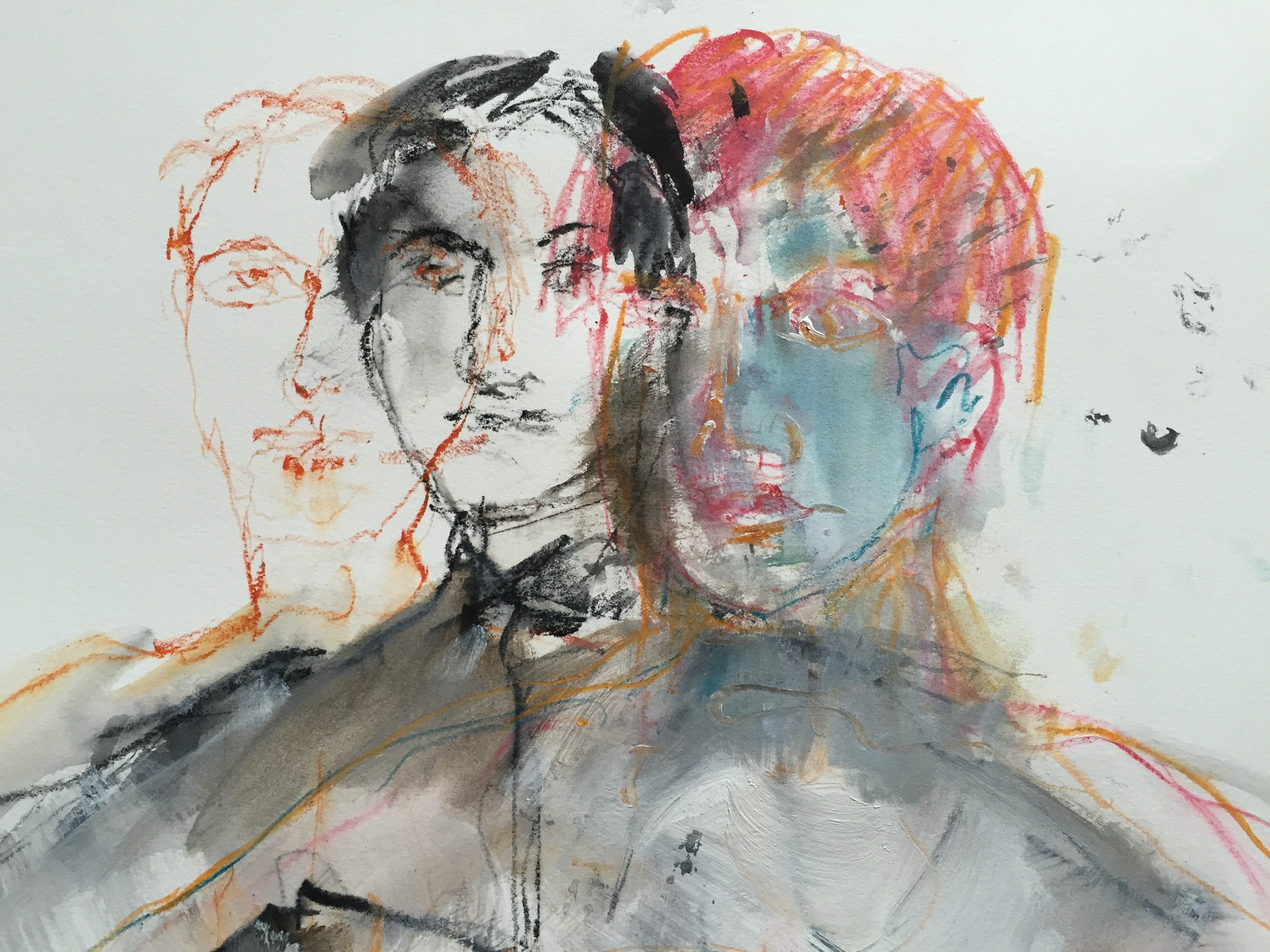
EQUILIBRIUM (noun)
• a state in which opposing forces or influences are balanced.
• a state of physical balance.
• a calm state of mind.
Two years ago, I punctured my eardrum and broke the stapes bone in my inner ear. How I did this is not important, but please do follow the advice of my mother and “never stick anything smaller than your elbow in your ear.” Finding relief to my sudden deafness and tinnitus became a pivotal part of my days, especially once an ENT told me it could be fixed.
I started searching out places that could do the appropriate surgery for a lower cost than the $8700 deductible, as well as additional costs, that it would cost in Oregon. Even the local doctor whistled at the out-of-pocket costs. I googled ear surgeons in the Northwest and got a link to a Northwest Atlanta area clinic that would do the whole thing for $4200 out of pocket.
Worth it.
Bonus: my brother lived in Atlanta and I could visit him. I had not seen him since our father’s funeral in 2020. Worth double the hassle of flying for an outpatient appointment. Worth having our first flight delayed and having to sprint to make the connection in Dallas. Worth getting into Atlanta well after midnight and taking a shuttle to the wrong hotel, then a cab to the right one, and standing for 40 minutes while the desk staff tried to get the computer to assign us a room.
While in flight, my brother texted. He’s been feeling poorly and was checking himself into the hospital. We could still stay at his place—here is where the key is hidden, and by the way, would we please do the laundry and feed the cat?
Bill had cancer. Again. Or still. It had been a 12 year struggle for him with some remissions and reoccurrences and other complications. There was a complication and he was back in the hospital getting IV fluids and antibiotics and chemo and antifungals and laxatives and pain killers and anti-nausea drugs and blood transfusions.
We stopped by the house, then went to the hospital to visit him, though he was tired and in no condition to chat. He expected to stay a couple of days and get some tests, some rehydration, and then he’d be back home.
It ended up being 11 days.
I am the third of five children, and Bill was one year older than I am. Growing up, we fought often and viciously, and loved and protected each other in equal amounts. To see him sick and suffering now sparks a feeling of helplessness and ambiguous loss. There was almost nothing I could do for him and that helplessness made me uncomfortable.
As did my ear. The pre-op appointment confirmed that I had 97% hearing in my right ear, and 15% in my left. The surgeon told me he would go through my ear canal and place a prosthesis between the the ear drum and the cochlea, which would, over the next few weeks, bypass the injured tiny ear bones to restore conductive hearing. This is called a Tympanoplasty with Ossicular Chain Reconstruction.
It is a minor procedure compared to most surgeries. I would be able to fly within four days and treat it with Tylenol. Still, surgery is nerve-racking for me—probably for everybody, not only because I am having my head cut into, but also because I must go under general anaesthesia. The idea of having no control over my brain or body sits badly with me and the best I can do to deal with it is to not think about it.
“I need the name of a local pharmacy,” said the receptionist.
“I don’t know any,” I replied, “Pick one.” So she did.
“It’s my wife’s birthday tomorrow too,” says the audiologist.
“Oh, is she getting surgery?” I asked.
“It’s my husband’s birthday today too,” says the pre-op nurse.
“You should celebrate with the audiologist,” I responded, as I lay in a hospital gown and watched the sun rise over suburban Atlanta. And then it was done and I woke in my brother’s bed, with no nausea and little pain.
Unlike my brother who got a liver biopsy, and my mother in Denver who fell in her assisted living apartment and broke three ribs.
Humans are wired to be in stasis, to biologically seek out equilibrium within the mind and body. Our cells work constantly to maintain a body-wide system of evenness, from our pH balance, to respiration, to temperature control. We fight to have equilibrium. We do not like to be off kilter. It can literally makes us nauseated to lose balance. Any adult can tell you how they feel after a short trip on a merry-go-round.
On the afternoon after surgery, I was off balance and vaguely confused, but in no pain. As I made my way down the hall, my head asked if I was hungover and I told it I was not, that the spinning was expected. The doctor had said my equilibrium would be off, be careful with sudden movements, no exercise or showers or sex, nothing that would raise my heart rate or blood pressure.
But the oncologist said that Bill’s cancer had spread. The chemo wasn’t working. And I felt my equilibrium knock itself one more degree off balance.
I know we don’t get guarantees in life. Death can come for anyone at any time. I know that. I know that cancer treatments are better than they used to be, but that no treatment is perfect, no doctor able to cure everyone. I know that.
But I don’t know how to feel when I hear bad news about someone I love. I don’t know how to react or support. I don’t know how to regain my balance, or to help my brother regain his.
My mother’s equilibrium was thrown off when her feet got tangled as she was turning. She had not even taken a step, but simply twisted in a way that allowed gravity to invite her to the floor. She hit the partial wall as she fell. After two days of pain, she agreed to go to the ER where a scan confirmed she had broken her ribs. In addition to the pain, she was now at a much elevated threat of respiratory problems. Since inhaling deeply was painful, her tendency would be to take shallower breaths. When lungs can’t fully inflate, they invite in the pathogens that cause pneumonia.
One sister was with Dotty in Denver. I was with Bill in Atlanta. Then we switched places. Flying was not as bad as I feared. I took a fair amount of Tylenol along with Dramamine and the altitude was not painful. I staggered through DIA where my sister claimed me outside of baggage. The next day she flew to see Bill, and I busted my mom out of the hospital, at her insistence, but against the recommendations of the doctors.
Dotty, at 91, was still fiercely independent in spirit, though in an assisted living facility in body. She wanted to go home, and I was there to help, despite still walking with one hand along the wall to keep me upright. We made it home, ate pizza and watched a PBS show on woodpeckers. And I forgot to give her her medications. I remembered in the morning, forgot again in the evening.
Bill was still in the hospital, now feeling the effects of a new kind of chemo. “There aren’t any real options after this,” said the oncologist, “Except for maybe clinical trials.”
I mistakenly tried to blow my nose and lay on the couch at night listening to the tinnitus symphony that made sleeping difficult.
Dotty awoke, one week after my surgery, and she spoke only in gibberish for hours, unable to make words, unable to insert her hearing aids or get dressed or eat, before we returned to the ER. And that is where I left her, waiting for the results of tests to determine if she had a stroke, or problems with medication, or a UTI, while I hurried to the airport to return home.
Over the next week, my sense of balance returned slowly. Sounds were muffled and hiccups were painful. Both of my loved ones were released from their respective hospitals.
I was fortunate I was able to see my brother and my mother. I was fortunate we were all able to get medical care. Still, it feels unfortunate as well, that the order of the world was twisted and it can’t find its way back to even. Losing a parent is expected and normal. Losing a brother, even in middle age, is not uncommon. But loss, even anticipated, even expected, makes us feel off-balance, make us feel the world is somehow not right.
I hoped that Dotty would die before Bill, but that wasn’t the case. She misses him immensely, as do we all. And for a parent to outlive their child is to upset the equilibrium of evolution, and how do we recover from that?
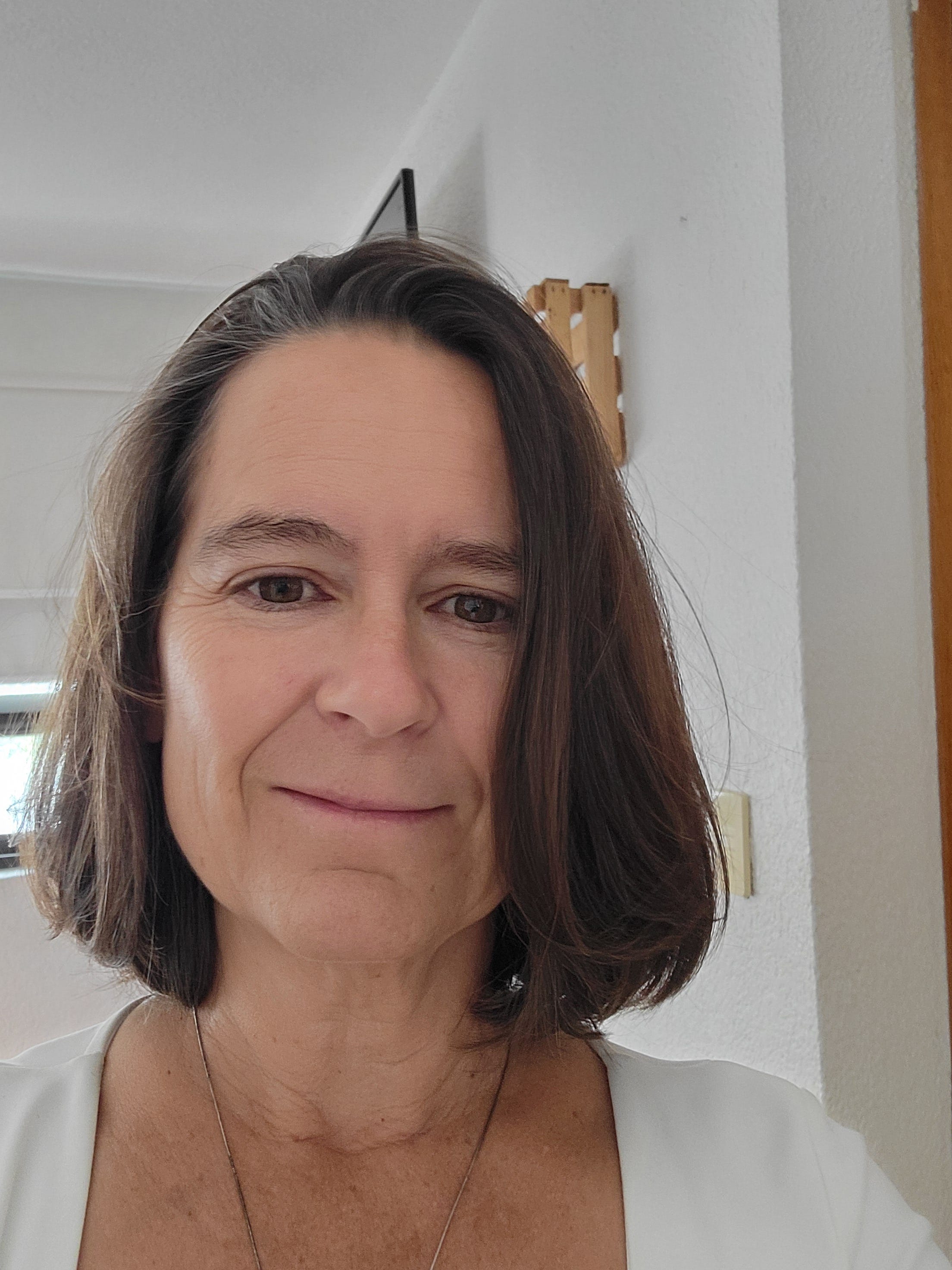
Author Eileen Nittler lives in Montana, where she tries to find balance in life. Sometimes she succeeds. She has been previously published in Oregon Humanities, NUNUM, 3Elements, The Write Launch, and others.
Artist Arlene Tribbia is an artist/poet who works across disciplines experimenting and exploring the boundaries and variations within poetry, drawing, painting, story and sculpture. Drawing is a poem. Every line is a verse. Every color or random mark is a phrase. These lines and gestures gathered create stanzas, stories, drawings and paintings. Stories of hers have been nominated for the Pushcart Prize and published widely as well as internationally. Her artwork has been exhibited in unique spaces from dance halls to skyscrapers as well as galleries, including Woman Made in Chicago and the Dunedin Fine Art Center in Florida where Robert Rauschenberg (hero, mentor-in-my-mind and influence) also has shown his work. http://www.arlenetribbia.com/
Thanks for this moving essay
Lovely and moving essay. These are the times we dread, then one day treasure in memory.